



A Day with Brené
Some things are worth rushing home from London for. The opportunity to finally spend a morning in the company of Brené Brown in my home city is one of them.
I’ve followed Brené’s work for years. As a social worker myself, before beginning my own business I always felt a deep sense of permission from her. Permission to find research sexy, to have conversations about ideas and emotions that didn’t fit naturally or commonly into traditional social science boxes, to lean into the uncomfortable more wholeheartedly, to feel more deeply and to follow the ‘sparks’ in the industry, chasing my curiosity fiercely and always being led to more of it.
When The Growth Faculty announced Brené Brown’s 2019 Australian Tour I was determined not to miss it. I grabbed my ticket the moment I found out about ticket sales and proceeded to invite more and more people in the lead up. I love the way that events bring communities together.
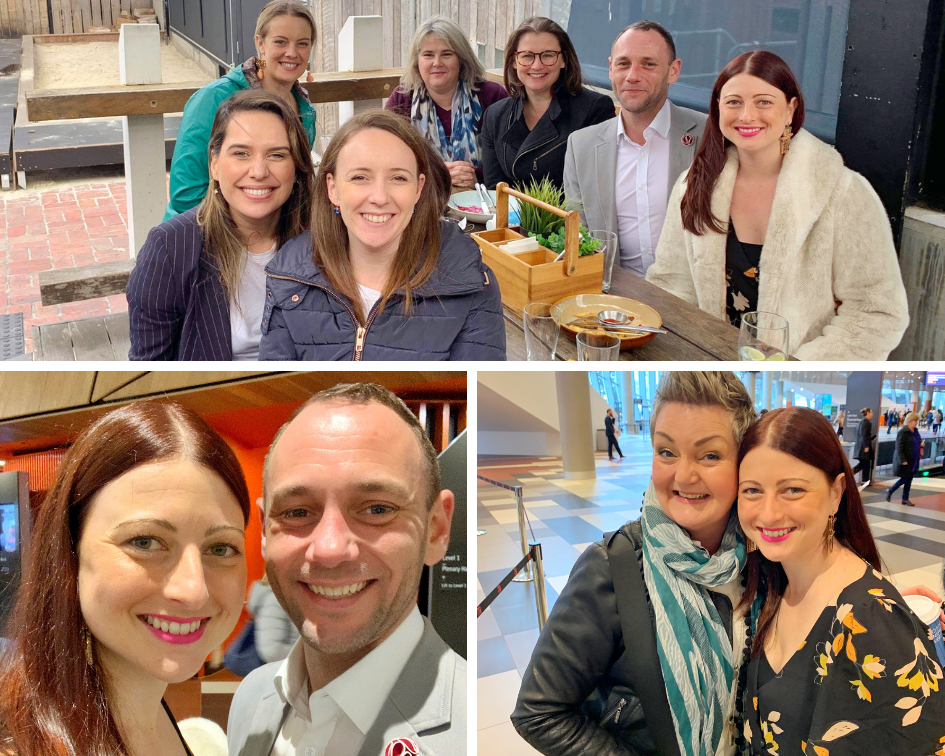
Even as someone very familiar with Brené’s work, I took sixteen pages of notes in the three hour time slot that she was on stage.
Here is a breakdown of my three biggest takeaways from the entire morning in her audience, noting that these were personal to me and are only the tip of the iceberg in relation to her sharing and what she gifted us. While these words are relevant for us all, I am confident that they will speak loudest to those of you working in organisations and managing direct reports (staff).
There are SO many other gems, insightful concepts, data pieces and stories that she told. So may good jokes she cracked.
So many elements of her speaking style and reliability that made the speaker coach inside of me light up and want to bow at her feet.
Her stories are not mine to tell, nor is the breadth of her generosity in relation to her content mine to share.
Please head to www.brenebrown.com to learn more about her work, to ted.com to watch her TED Talks and to her her social media accounts where you can follow her directly: www.facebook.com/brenebrown or www.instagram.com/brenebrown
Okay, let’s break it down…
Takeaway number one:
There are clear barriers to courage. When we know what those barriers are, we can work on dismantling them within ourselves and others.
The barriers include:
Tapping out of hard conversations.
When we choose to opt-out of hard conversations or to hand responsibility for having them over to others (hello HR departments!) we miss the opportunity to have important conversations and build trust with other people in our teams. Staff have a right to hear things of importance about their performance and role from their direct line manager without the added feelings of shame, embarrassment or isolation that can at times come from finding themselves sitting down with others outside of their main point of supervisory support. Being clear in conversation is a kind thing to do. What is unkind is being unclear and dancing around a situation, leaving someone feeling uncomfortable and anxious within their communication with us. While the context here has a strong organisational focus, this was a good reminder for me about the importance of leaning into challenging conversations in all areas of my life. #allin
Brené suggested that when having hard conversations, they best take place within in a five-ish minute period, followed by a consequent check-in thirty minutes later that acknowledges any awkwardness and how the receiver is feeling.
PRO TIP : Be willing to hear and understand more about what ISN’T in order to understand more about what IS. For example, in Brené’s research she found that many people weren’t easily able to describe emotions like ‘love’ and ‘trust’, but that that they could speak volumes about what love isn’t and what it doesn’t involve.
Not investing in fears and feelings.
Brené stated that we can either spend a reasonable amount of time getting to the core of the negative thoughts and feelings that people are having, or we can ignore them and spend a huge amount of time dealing with problematic behaviours later on. Problematic behaviours can’t be dealt with without conversations about the fears and feelings behind them, so if as leaders we want to go from good to great, we have to be willing to have those conversations with our staff. Systems can never replace human leadership and courage. We are trying to create workplace cultures that are better than what people experience at home, so we have to hold space for their feelings and their fears.
PRO TIP : Be willing to hold space for your staff to speak openly about what’s under the problematic behaviours they are displaying. Be committed to staying in that conversational space until you can both work out what fears and feelings are there for them and, in turn, how you can better support them as their manager.
Staying stuck in setbacks.
Brené spoke about the importance of teaching people to manage/be in control of their own ‘bounce’ – that is, the rate at which they are able to bounce back or reset after something negative, unexpected or stressful happens. She spoke openly about how difficult it is as a leader to be trying to hold everyone’s hands while also trying to fix a problem when one arises. Alternatively, if we teach people how to reset and how to do so well, they are more likely to bounce back of their own accord and also much more likely to be brave. It is easier for us to be brave if we know we’re capable of getting back up afterwards.
Instantly, my mind flooded back to past managerial roles I’ve had and my failings in supporting my staff to really work on the core of their bounce. I pride myself in providing opportunities for growth, but I had missed this one big time.
PRO TIP : As Brené has found a lot of sports scouts do, when recruiting, consider the existing reset skill of your candidates.
Problem solving and action bias.
When there’s a problem it is easy for us to try to solve it straight away because we can’t stand to be in the vulnerability of working to fully identify what the problem is. Hello fixers and those of us that looove being in ‘fix-it’ mode.
Sitting in the discomfort for as long as it takes to fully understand an issue will allow for more courage and certainty in the steps towards a solution.
PRO TIP : Take your time where you can. Lean into discomfort and understand that it is a natural part of our human existence, especially when problems arise.
Inclusivity, diversity and equity.
If you are a person (particularly a white cisgender person) with privilege, you need to honour these conversations and be willing to have your arse kicked a little every single time you have them. Brené mentioned that daring leaders are never silent about important things and they always place more value on getting things right than on being right.
Being in a position where opting out of these conversations is possible is a reflection of privilege in itself, so we have a responsibility to be all in, all the time. We truly, truly do.
PRO TIP : Take a ‘see it, call it’ approach to any instances you witness that display a lack of inclusivity and/or that do not actively honour diversity. Be an ally.
Shame and blame.
Brené confirmed that as humans, we can easily confuse shame with guilt.
Shame is related to the self and how we feel about ourselves, using language based on who we are. For example “I AM bad”.
Guilt, on the other hand, focuses solely on behaviours and things we have done. For example, “I DID something bad”. This was the most helpful reminder for me I think.
Shame is not a management tool, nor is it an effective way to motivate people into positive action. Brené made a great analogy that compared seeing shame present in an office to seeing termites openly walking up a wall. It is a full-on crisis situation.
Examples she used of how shame shows up in workplaces included gossip, secret meetings held after official meetings (back-channelling) or performance evaluation processes that make people feel small.
Interestingly to note, shame can only rise to a certain level before people need to disengage with the source of it in order to protect themselves. The higher someone’s self esteem, the quicker they will disengage. Therefore, as long as shame is the approach, disengagement is inevitable.
PRO TIP : Consider whether you are choosing blame or accountability when a problem arises. Brené said that her research has defined blame as ‘The discharging of pain, anger and discomfort’. She also suggested that accountability is its opposite. And as a no-brainer, don’t shame people. It’s excruciatingly painful and we do enough of it to ourselves.
Takeaway number two:
Within courage is a set of four skillsets. Each is observable, measurable and teachable. (YAY!)
They are:
Rumbling with vulnerability.
Brené so correctly pointed out again that there can be no courage without vulnerability. These two things are not mutually exclusive and while vulnerability feels like weakness to us internally, it looks like courage to others externally.
She suggested that we need to ‘embrace the suck’ and not ever expect vulnerability to feel good. If we can learn how to stay present in vulnerability despite the discomfort, we can stop ourselves from ‘armouring up’ out of fear – that is, putting on emotional armour (through shutting down, disconnecting, being defensive, getting territorial etc.).
One of the most potent things I heard Brené say was that we tend to choose to ‘armour up’ as a result of being scared of becoming irrelevant (especially in our workplaces) yet it is the process of putting on that emotional armour that actually ENSURES our irrelevancy through taking away the opportunity for our greatest strengths to shine through – things like our authenticity, our curiosity, our grounded confidence and our connection to personal values.
Speaking of vulnerability, you know that icky feeling you get when someone says something that you know is internally true for you, yet on the outside you’re still trying to play it cool? That was me as she was speaking about irrelevancy. The armchairs in the Melbourne Convention Centre were too padded and comfy for me to sink down into them.
PRO TIP : Give yourself permission to be vulnerable and to show up courageously to situations where you know you cannot control the outcome.
Living into your values.
Well beyond the idea of personal values (which I was excited to go beyond given the amount of client work I already do in that space), Brené spoke about the importance of operationalising values into sets of observable behaviours that can then be measured and assigned accountability to. This is a piece of work I’m undertaking for myself here at Heart Sparks at the moment, so my ears pricked up.
So often workplaces instate values and then never do anything to measure the organisation’s performance or the work and behaviour of their staff against them. You’ve seen that happen, right? Those posters on the tea-room walls or excerpts in your work contract that you’re encouraged to look at then never hear boo about again? Values are just buzz words unless they’re being measured through actions. When staff are clear on the value behaviours expected of them and how those behaviours will be measured, they in turn know how to show up and are empowered to do so.
PRO TIP : Understand how you can support your staff’s personal values and how you can support them to recognise the warning signs that their values are out of alignment.
Braving trust.
Again, trust needs to be operationalised according to Brené’s research.
The big piece here for me was in relation to boundaries and the importance of placing as much emphasis on what IS okay as well as what’s not okay when communicating your boundaries to others.
For example, if someone is yelling at you…
“What’s okay is you being really pissed off at me and feeling frustrated at this whole situation. What’s not okay is you raising your voice, rolling your eyes at me and storming out of the room. Be pissed off and talk to me about that absolutely, but yelling at me is not on.”
In surveying one thousand managers and asking them what a trust-building activity by their direct reports is, Brené let us know that the most common response was ‘asking for help.’
It makes sense. Why would we want to hand important things over to someone that we know will push through blindly rather than ask for help when they need it? According to Brené, this is where non-judgement comes in, both in the way that we refrain in the judgement of others when they ask for help and also in the way that we refrain from judging ourselves.
Let’s not contribute to the creation of cultures where people are scared to ask for help.
PRO TIP : Give yourself permission to ask for help and encourage your staff to do the same. Stand beside those asking for help and support without judgement.
Learning to rise.
I was nodding like a bobble head for the entire time that Brené spoke on this. She called out the fact that the brain experiences and interprets emotional threats the same way as it does physical ones and, consequently, looks for meaning when it perceives a risk of any kind. The brain longs for stories to make sense of situations and, so, if we are able to give it one, it will in turn become calmer and reward us with a chemical release.
The good AND bad news: that chemical release will come regardless of the accuracy of the story.
According to Brené (I couldn’t agree more with her and her work), courageous people bring awareness to the stories they are creating and check them based on the evidence. They also aren’t scared to speak openly to others about the fact that their mind has created a story that may not be accurate.
PRO TIP : Give your staff opportunities to speak to you and check out the stories they are creating about things that are happening in the workplace.
Takeaway number three:
When it comes to difficult conversations, be conscious.
Brené reminded us that most people are both scared and brave at the exact same time every day. Pressure off, people, we can be both. It’s what we DO when we are feeling scared that creates a barrier to courage, not the fear itself.
Courage requires vulnerability and being vulnerable is really hard. It takes conscious effort and an intentional choice. With Brené, I’ve had confirmation of the following really helpful points when it comes to having difficult conversations and giving/receiving feedback. I can see that a lot of them I’ve already been doing, either subconsciously or consciously, but it felt really good to bring even more awareness to them…
– Don’t be scared to circle back to someone if you know that you weren’t showing up for them as fully/helpfully as you could have the last time you spoke. Let them know you’re aware of that and check in with how they’re doing.
– Check in with what your values dictate regarding how you can best show up to giving and receiving feedback. How can you honour your values in the way you have that conversation?
– Allow feedback to happen over two, fairly short meetings with a time gap in between. People need time to process what they have heard fully in those situations and also time to formulate their own questions before knowingly being able to jump into conversations about a solution and moving forward. Give people the space they need.
– Don’t ever prioritise your comfort over others’ pain by greeting someone’s difficulty with the words ‘at least’. For example, “at least you know you can become pregnant” to someone who has experienced a miscarriage or “at least you didn’t need chemotherapy” to someone who has survived cancer. Just don’t.

All in all, it was a big, honest, learning-fuelled three hours and I’m grateful to both The Growth Faculty and Brené Brown for the opportunity to be present. As I mentioned at the start of this post, this is truly just the surface of what took place in that room. Please don’t hold back in interacting with Brené’s work, buying her books (they are all great!) and keeping your eyes peeled for her next events.
Over to you now. What is coming up for you based on my takeaways here? Let me know in the comments section below!
Yours in vulnerability, courage and all that lies between,

Gen
Thanks for sharing all these gems Jo! So much good food for thought, and a great reminder about the serious down sides of avoiding hard conversations.
Johanna
You’re so very welcome Gen! I’m thrilled this still speaks to you. x